The tech industry is moving at a velocity that traditional education systems often struggle to match. As the global demand for skilled developers reaches an all-time high, many students and career-switchers are looking for ways to enter the workforce without committing to a four-year bachelor's degree immediately.
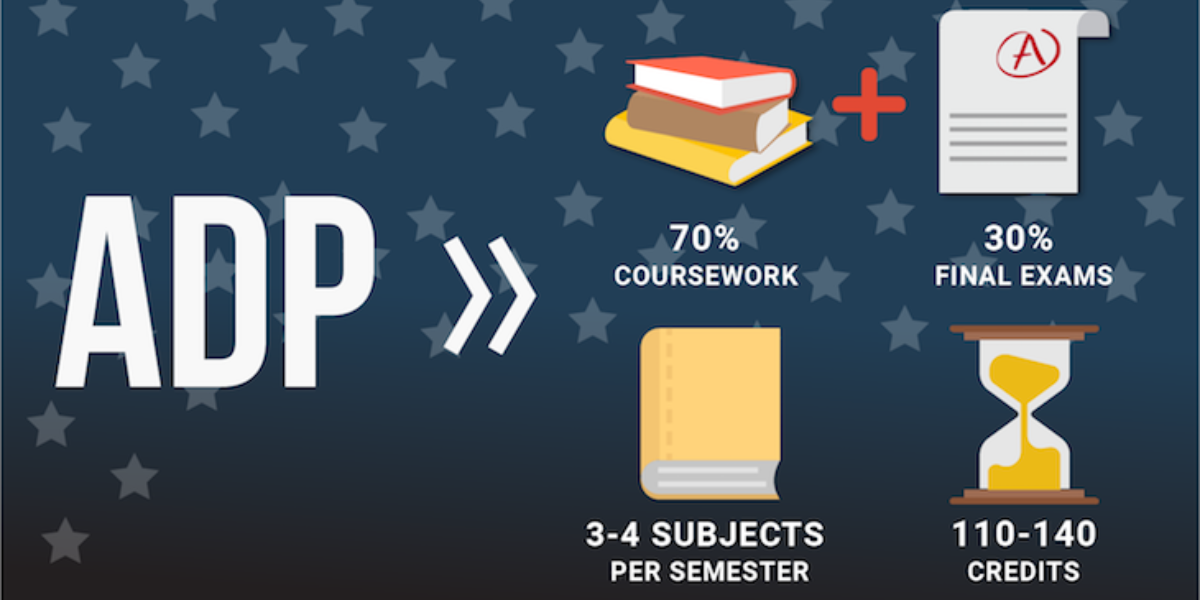
This has led to the rise of the "Fast-Track" approach, where an Associate Degree Program (ADP) serves as a potent bridge between ambition and employment. For those looking to dive into code, logic, and system design, the ADP Software Engineering offers a specialized, high-impact curriculum designed for the modern economy.
Skill-Centric Learning vs. Broad Theory
One of the primary advantages of an Associate Degree is its laser focus on technical proficiency. While a traditional four-year degree often includes a wide array of general education requirements, an ADP is structured to get you into the "engine room" of software development from day one. You spend less time on abstract concepts and more time mastering the tools that companies actually use.
In a typical software engineering ADP, the curriculum is built around core competencies:
- Coding Fundamentals.
Mastering languages like Python, Java, or C++. - Web Development.
Learning both front-end (HTML/CSS/JS) and back-end logic. - Database Management
Understanding how to store, retrieve, and secure user data. - Mobile App Development
Building applications for the iOS and Android ecosystems.
By stripping away the fluff, these programs ensure that you are job-ready in half the time. This efficiency is why many students choose to Explore Our Degree Programs to find the specific niche, be it software, IT, or data, that aligns with their natural strengths.
Breaking the Entry-Level Barrier
The "experience trap" is a common hurdle for new developers: you can't get a job without experience, and you can't get experience without a job. An Associate Degree helps solve this by incorporating project-based learning and internships into the two-year cycle.
By the time you graduate, you don't just have a diploma; you have a portfolio of GitHub repositories and real-world applications to show potential employers. Furthermore, the industry’s perception of degrees has shifted. Tech giants like Google, Apple, and IBM have famously removed the four-year degree requirement for many of their roles, prioritizing "what you can do" over "how long you sat in a classroom."
An ADP graduate who can demonstrate clean code, solid debugging skills, and a grasp of Agile methodologies is often just as competitive as a traditional graduate.
Financial Agility and ROI
Education is an investment, and like any investment, the Return on Investment (ROI) is a crucial factor. Pursuing an Associate Degree is significantly more cost-effective than a full bachelor's degree. It allows students to enter the workforce two years earlier, meaning they start earning a developer’s salary while their peers are still paying tuition.
For many families, this financial flexibility is the deciding factor. To help with this planning, reviewing a transparent Fee Structure is essential. It allows prospective students to calculate their investment accurately and understand how quickly they can recoup their costs once they secure a position in the high-paying tech sector.
Additionally, many ADP graduates choose to work for a few years and then have their employers subsidize their remaining two years of education to complete a full BS degree later.
Adaptability in a Changing Market
The software world changes every six months. A framework that is popular today might be obsolete by the time a freshman graduates four years later. The two-year format of the ADP allows the curriculum to be more agile and responsive to industry trends. Whether it's a sudden shift toward Artificial Intelligence integration or the rise of a new JavaScript library, shorter programs can pivot their teaching faster than large, traditional university departments.
This adaptability also applies to the student. If you discover midway through your ADP that you prefer Cyber Security or Data Science over pure Software Engineering, the shorter timeframe makes it easier to pivot without having wasted years of specialized study.
Building a Professional Network
While self-teaching through bootcamps or YouTube is an option, it lacks the structured networking opportunities of a university environment. In an ADP, you are surrounded by peers who will become your future colleagues, and instructors who often have deep ties to local tech hubs. These connections are frequently the source of job referrals and collaborative startup ideas.
Conclusion
The path to becoming a software developer is no longer a one-size-fits-all journey. The value of an Associate Degree lies in its ability to provide a high-quality, practical education that respects the student's time and financial resources.
It is a "fast-track" not because it skips the hard work, but because it focuses that work on the skills that truly matter in a boardroom or a development sprint. If you are ready to stop dreaming about code and start writing it, the ADP path is your most direct route to the digital frontier