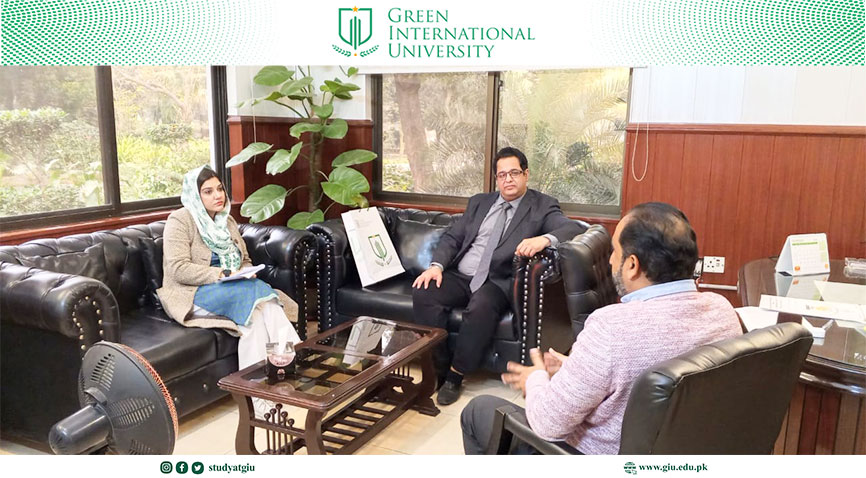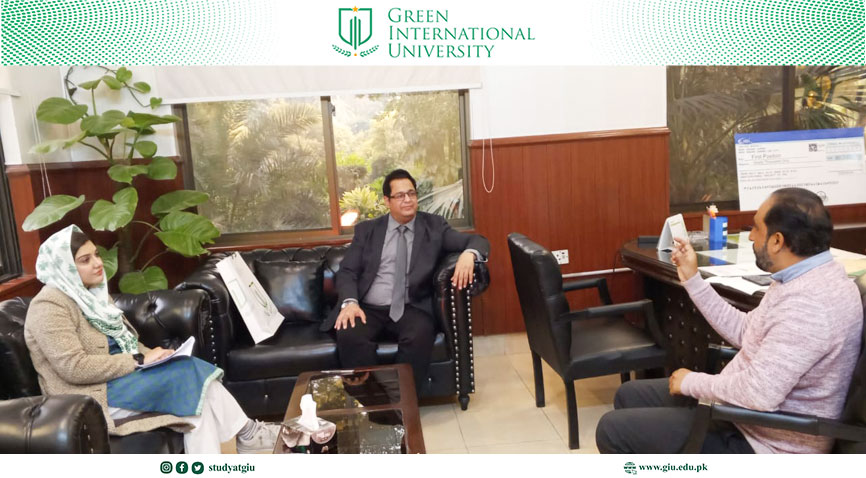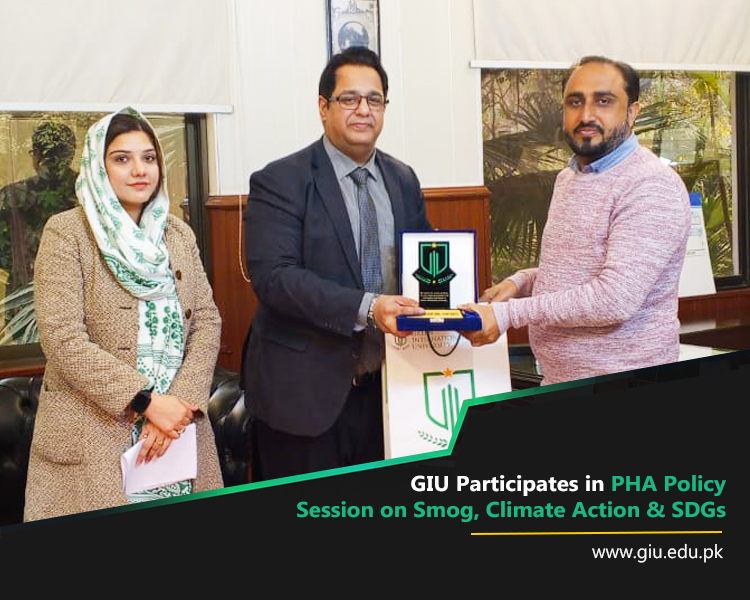
Green International University (GIU) was honored to be invited by the Punjab Parks & Horticulture Authority (PHA) to participate in a high-level policy development session focused on advancing multiple Sustainable Development Goals (SDGs). The session placed special emphasis on Climate Action (SDG 13), particularly addressing Lahore’s rising smog challenge and its strong interlinkages with No Poverty (SDG 1), Zero Hunger (SDG 2), Good Health & Well-Being (SDG 3), Quality Education (SDG 4), Decent Work & Economic Growth (SDG 8), Sustainable Cities & Communities (SDG 11), Life on Land (SDG 15), and Partnerships for the Goals (SDG 17).
The engagement provided a comprehensive platform for problem identification, evidence-based documentation, solution design, implementation planning, and monitoring & evaluation, contributing to the development of integrated and sustainable policy frameworks for environmental and public health challenges.
During the session, GIU highlighted its expertise in public health, environmental health, climate change, and air quality management. The university showcased its ongoing initiatives, including community medical camps, health awareness programs, and SDG-3–aligned interventions, demonstrating its practical contributions to improving population health and environmental resilience.
GIU also emphasized its strong institutional capacity to support policymaking through systematic data collection, health screenings, surveys, community feedback mechanisms, health data analysis, and program monitoring. The university offered strategic support in preventive healthcare, community health awareness, and environmental and climate risk management, with a particular focus on smog, PM2.5 exposure, and heat stress.
This collaboration reflects Green International University’s commitment to fostering healthier, resilient, and sustainable communities through meaningful partnerships with government institutions such as PHA, contributing to evidence-driven policy solutions and long-term sustainable development.